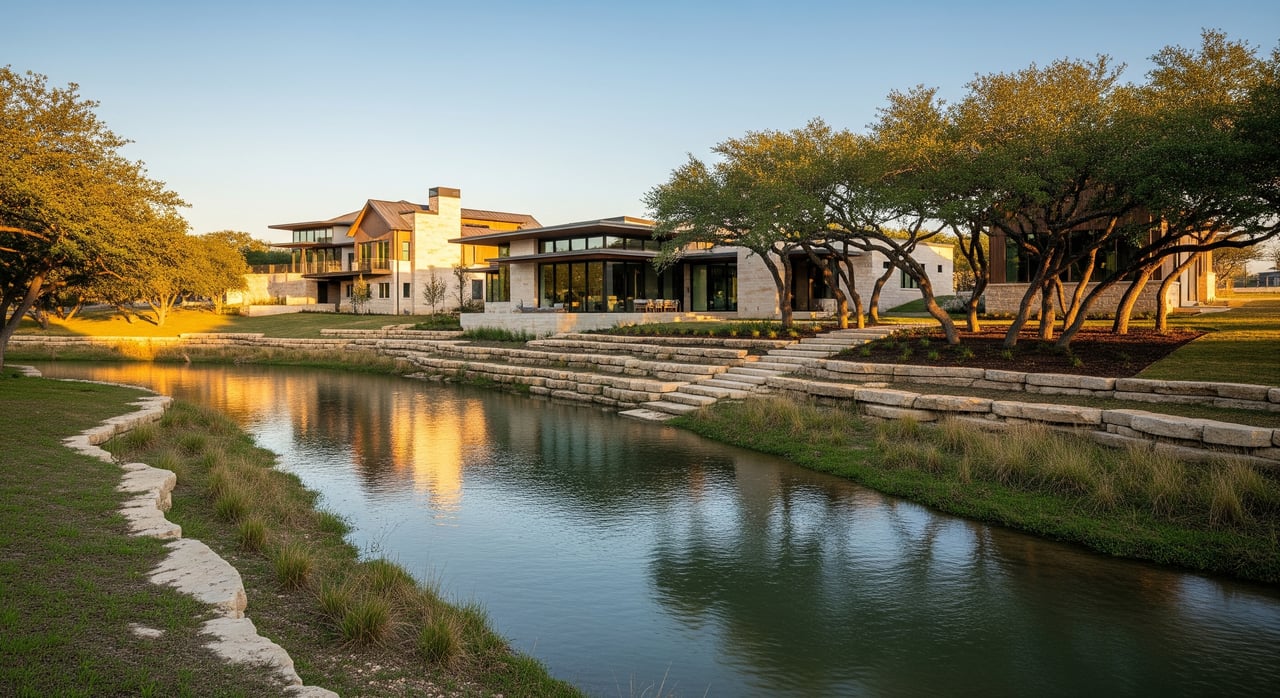
Two homes on the same street in Bluffview at Camino Real can feel like two different worlds. One might back to a quiet creek with a shaded canopy, while another sits high on a ridge with sweeping views. If you are weighing creekside versus hilltop living, you want to understand how elevation, water, topography, and tree cover affect daily life, risk, and value. This guide breaks down the micro-markets in Bluffview, what to look for on tours, and how to make a confident choice. Let’s dive in.
Bluffview micro-markets overview
Creekside lots
Creekside lots sit next to a named creek, seasonal stream, or drainage swale. You often get thicker tree canopy, natural soundscapes, and a private, green feel. Some sites include buffer zones or conservation easements that shape where you can build or landscape.
Hilltop lots
Hilltop or ridge-top parcels occupy the highest ground. These homes often capture long views and abundant light. Slopes can be steeper on approaches, and yard space may be terraced rather than flat.
Mid-slope and terraced lots
These are the in-between parcels, set between the creek and hilltop. Expect mixed buildability, partial views, and varied slope conditions. You can find good balance here if you prefer some elevation without the steepest grades.
Interior buffered lots
Interior parcels behind tree buffers are typically flatter and more sheltered. They offer strong privacy and easier maintenance, though views are limited compared to hilltops.
Creekside living: pros and cautions
What you may love
- A serene, natural setting with wildlife and a cooling microclimate.
- A private, green feel that appeals to buyers who prioritize nature and quiet.
What to watch
- Flood and erosion risk, even with smaller creeks after heavy rain. Some parcels may fall within FEMA flood zones or local floodplains.
- Insurance costs can be higher if the home is in a mapped flood zone, and lenders may require flood coverage.
- Ongoing maintenance, including bank stabilization, mosquito control after standing water, and debris cleanup after storms.
- Setbacks, easements, or environmental rules can limit where you add improvements.
Signals to check during tours
- Floodplain status, past flood events, bank erosion, and undermined trees.
- Neighbor mitigation, such as retaining structures or improved drainage.
Hilltop living: pros and cautions
What you may love
- Panoramic views, stronger natural light, and perceived prestige.
- Lower flood exposure and often drier soils at the top if drainage is adequate.
- Potential for better airflow and fewer insects in some seasons.
What to watch
- More exposure to wind and sun, which affects cooling loads and landscaping.
- Build complexity on rocky or steep sites, including cut-and-fill, stepped foundations, and retaining walls.
- Limited contiguous flat yard space unless terraces are in place.
Signals to check during tours
- Soil and rock conditions, and whether neighboring sites needed significant cut or fill.
- View corridors from living areas at different times of day.
Trees, privacy, and shade
A mature oak, mesquite, and cedar canopy offers meaningful privacy and shade. Tree cover can moderate cooling costs but may limit long views and solar potential. Large trees near structures can raise maintenance needs, including root management, pruning, and limb-risk assessments.
Some jurisdictions and HOAs have tree preservation rules, and removals may require permits. Before planning major pruning or removals, confirm guidelines and approvals.
Topography, access, and buildability
Slope directly affects design choices, cost, and lifestyle. Steeper lots usually require higher foundation budgets, more retaining walls, and stepped living spaces. You can gain dramatic outdoor areas, such as a walk-out lower level, but usable flat yard often requires terracing.
Flatter lots simplify builds and drainage, and they tend to offer larger contiguous outdoor areas for play or entertaining. Orientation matters as well. Sun exposure affects comfort, outdoor living, and solar viability.
Consider access and utilities. Steep driveways, longer utility runs, and emergency vehicle access can influence permits, timelines, and insurance.
Price, insurance, and financing
Views and privacy often command premiums because they are difficult to replicate. Creekside character also attracts lifestyle buyers who value nature and seclusion. That said, some premiums are offset by higher build or maintenance costs, or by restrictions tied to easements and setbacks.
When you compare recent sales, control for lot position. Compare hilltop to hilltop, creek to creek, and adjust for usable yard area, tree cover, flood status, and slope. Site premium is often very localized, sometimes down to the block or side of the creek.
On insurance and financing, flood exposure is a key variable for creekside homes. Lenders may require flood insurance if the structure is in a mapped zone, and an elevation certificate can help confirm rating. Homes on steep slopes or under large canopies may carry higher homeowner premiums or need endorsements for specific risks, such as wind-driven tree damage. Appraisers weigh both the upside of views and privacy and the downside of limited usability or access. If access is steep or outdoor space is fragmented, the appraised value may reflect those constraints.
Permits, easements, and rules
Confirm permit needs early, especially for retaining walls beyond certain heights, pools, significant grading, or driveways with steep slopes. Some tree removals also require approval. Creek-adjacent parcels may include drainage or utility easements that limit improvements or fencing.
Your due diligence should include contact with the correct local authority, which depends on jurisdiction. In this area that can include Bexar County or City of San Antonio permitting teams, the local floodplain manager, and the water or sewer utility for service constraints and connections.
Smart due diligence for buyers
Site-visit checklist
- Photograph the distance and elevation between the home and the creek, and look for signs of past water damage.
- Test driveway slope and street access, especially in wet conditions.
- Look for erosion, exposed roots, or undermined trees on banks.
- Observe neighboring improvements and view-blocking vegetation or new builds.
- Check rooflines and window orientations to confirm views from key rooms.
Ask the seller or listing agent
- Any records of past flooding, insurance claims, or mitigation.
- Details on recorded easements, covenants, and tree removal rules.
- Recent grading or retaining wall permits and engineering.
- Utility maps and the location of sewer connections versus septic, if applicable.
Inspection and study items
- Flood zone check using FEMA and local maps, and request an elevation certificate if near a floodplain.
- Geotechnical or soil report for steep or rocky sites.
- Structural or foundation inspection for older homes on slopes.
- Arborist assessment for significant canopy trees.
- Drainage or erosion review by a civil engineer on steep or creekside sites.
Who should choose which lot type?
View-seeker or prestige buyer
- Focus on hilltops for long views and strong light. Confirm your view corridor and check for potential encroachment risks from future infill or growing tree lines.
Nature and privacy seeker
- Creekside parcels deliver the green, secluded feel. Verify flood status, any easements, and long-term bank stability before you commit.
Low-maintenance buyer
- Flatter interior lots with good canopy tend to have lower annual upkeep and simpler access. These can be easier for daily routines and long-term ownership.
Investor or resale-focused buyer
- Favor functional outdoor space, easier access, and fewer regulatory hurdles. Hilltop or creekside premiums are achievable, but the house and site must appeal to a broad buyer pool.
Negotiation and offer strategy
If a property is in or near a floodplain, or shows signs of geotechnical risk, include contingencies for an elevation certificate, flood insurability, and a geotechnical or foundation review. For significant canopy, an arborist report can clarify risk and maintenance needs.
Use discovered costs as leverage. If you will need new retaining walls, drainage improvements, or tree work to preserve views or protect structures, request credits or pricing adjustments. Tie requests to documented bids or expert memos to keep negotiations clear and fact-based.
Seller tip: showcase site strengths
If you plan to sell, help buyers understand the land. Include drone or overhead shots that show the lot’s position relative to the creek and ridgelines. Add side-profile photos that reveal slope and the home’s relationship to the creek. Capture views from key living spaces at different times of day, and highlight specimen trees with close-ups. These visuals help buyers read the site and justify premiums tied to views, privacy, or natural setting.
The bottom line
In Bluffview at Camino Real, the land under the home is often the true differentiator. Creekside living delivers nature and privacy, while hilltop homes bring light and views. Mid-slope and interior lots can balance ease of living and value. When you match site features to your lifestyle, and verify flood, slope, and tree conditions with the right due diligence, you can buy with confidence.
Ready to refine your search or pressure-test a short list? Connect with Donna Hartley to discuss your priorities, review site-specific risks, and shape a smart offer strategy.
FAQs
Are creekside homes in Bluffview at Camino Real always in a flood zone?
- No, proximity raises the possibility, but FEMA and local mapping and the home’s elevation determine the actual flood zone. Verify with maps and an elevation certificate if needed.
Do hilltop homes in Bluffview at Camino Real usually cost more?
- Often hilltops command premiums for views and privacy, but build complexity and yard usability can offset value. Use recent local comps for a fair comparison.
What inspections are essential for steep or creekside lots in Bluffview at Camino Real?
- A geotechnical or soil report, foundation review, flood and elevation verification, and an arborist assessment are strongly recommended.
How should I compare two similar Bluffview homes on different lot types?
- Compare usable flat yard area, any flood or easement constraints, expected maintenance costs, and likely buyer demand for each site type.
Will trees increase insurance for homes in Bluffview at Camino Real?
- Large trees close to structures can raise risk and may affect premiums or endorsements, so get an arborist review and discuss coverage with your insurer.
