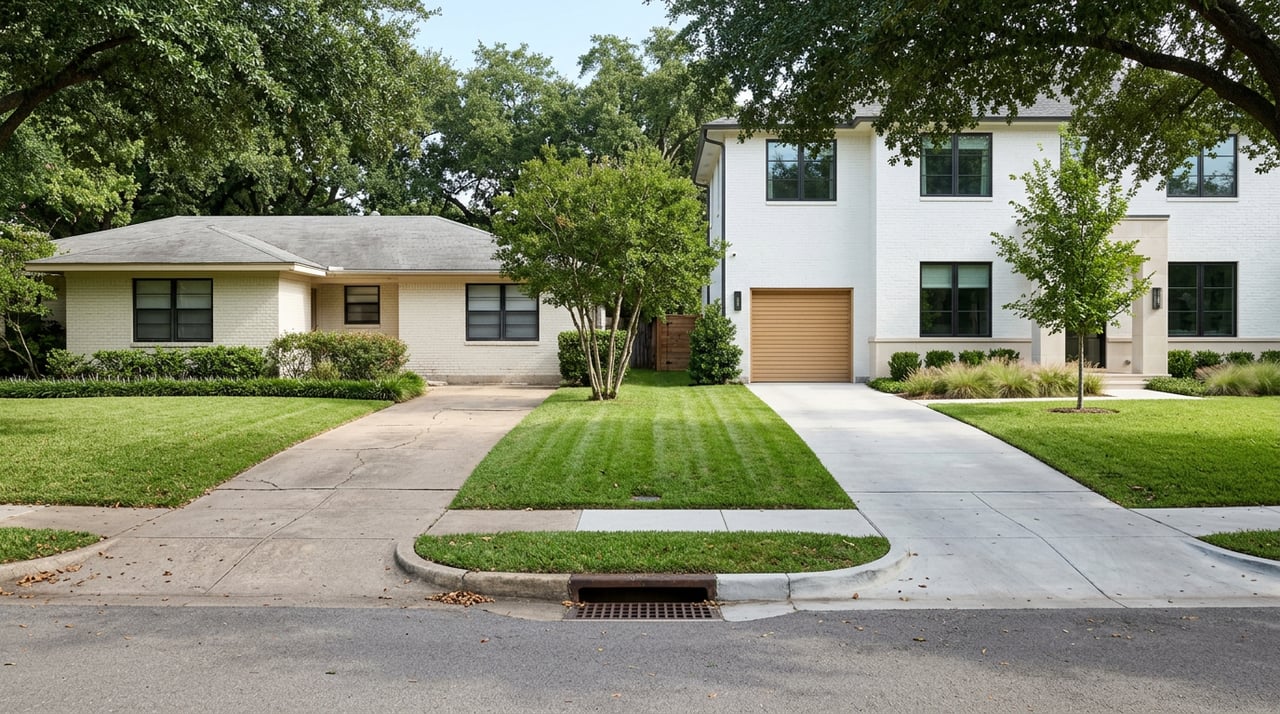
Are you seeing taller rooflines, fresh concrete drives, and builder signs where mid‑century ranches used to sit? Northwest Dallas is changing fast, and it is not just your street. New construction, infill, and big redevelopment projects are reshaping what you can buy and how you should price a home if you plan to sell. In this guide, you will learn what is being built, how it affects pricing and appraisals, and smart steps to protect your bottom line. Let’s dive in.
What new construction looks like in Northwest Dallas
Teardowns and infill replacements
Across North Dallas pockets, older single‑story homes are coming down and larger two‑story builds are going up on the same lots. You will notice bigger footprints, new curb cuts, and updated sidewalks. Local coverage has documented this pattern for years, noting how teardowns change streetscapes and scale in established neighborhoods. If you drive these blocks, you will see what D Magazine described as a steady replacement cycle that modernizes interiors while altering lot coverage and canopy.
Small‑lot contemporary subdivisions
Inside the city and in near‑in suburbs, builders are carving out small clusters of new homes on underused parcels. These sub‑communities often target move‑up buyers who want modern floor plans and low‑maintenance lots without moving far from central Dallas. You will spot model‑home signage, contemporary elevations, and cohesive streetscapes that read as pocket neighborhoods.
Mall‑site and mixed‑use redevelopment
Large, obsolete retail sites are being reimagined. The Valley View Center site in North Dallas is a prominent example with demolition, park planning, and phased mixed‑use proposals that will change nearby traffic and retail patterns. The city’s actions signal long‑term commitment at the site, as covered by NBC 5’s report on the Valley View property. Expect these projects to influence demand for nearby homes as amenities and streets evolve.
Suburban momentum around Plano and Irving
While Northwest Dallas sees infill, a big share of new homes across the metro is rising in suburban and exurban corridors. The Dallas area led the nation with an estimated 71,788 authorized housing units in 2024, according to a Dallas Morning News analysis of Census permits. That growth includes many master‑planned communities on the fringe, which can pull some buyers outward and shape price competition back inside the city.
The scale behind the change
- Dallas County recorded 12,711 building permits in 2024, a reminder that activity is widespread and visible to residents across the county. You can see this baseline in Census QuickFacts for Dallas County.
- For a pulse on single‑family trends, the Federal Reserve’s Dallas series tracks monthly permits. The FRED DALL148BP1FH series shows historically high volumes in recent years.
- After a rapid post‑pandemic run, builders eased starts in 2024 and 2025 as finished inventory rose. Local reporting noted more frequent incentives and selective price trims to move quick‑close homes. See the Dallas Morning News coverage of this cooling and incentive use.
The takeaway: building is still robust by national standards, but in the near term you may have a bit more leverage as a buyer. Effects remain neighborhood‑specific, so your block can differ from the headline.
How new construction affects prices and negotiations
The new‑home premium is tighter
New builds traditionally commanded a premium over resale homes. Recent industry analyses show that premium has narrowed in many Sun Belt markets as builders adjust pricing and use incentives. In practical terms, a well‑located new home can now compete closely with a renovated resale on a per‑square‑foot basis.
Builder incentives shift the math
When traffic slows, builders in North Texas often lean on mortgage rate buydowns, closing‑cost credits, and upgrade packages to move inventory. As local coverage confirms, this became common in 2024 and 2025. Those incentives can reduce your effective monthly payment enough that a new build pencils out similarly to a resale with a comparable list price. Review the reported incentive trend and builder tactics before you compare homes.
Appraisal and comp ripple effects
Clusters of new homes add fresh comparable sales that appraisers and listing agents will use. Depending on lot size, finish level, and location, these comps can nudge values up or down for nearby resales. If you are selling next to new construction, you often need either a sharper price or a clear value story that highlights your lot size, mature trees, or updated systems. Builders’ incentives also affect buyer psychology, which can influence offers on nearby resales.
What buyers should do right now
Use this checklist to make confident choices when you compare a new build with an existing home in Northwest Dallas.
- Focus on total cost, not just list price. Ask for a side‑by‑side of the builder’s incentive options and what they do to your monthly payment. Temporary versus permanent buydowns can produce very different long‑term costs.
- Compare lot and streetscape tradeoffs. Many infill builds maximize interior space, while older homes may offer larger lots, established canopy, and quieter setbacks. This can matter for long‑term livability and resale. Local coverage of teardown trends in North Dallas highlights these tradeoffs, as noted by D Magazine.
- Ask for nearby closed sales. Request recent closings from the builder’s sales office and study how incentives were structured. You want clarity on net pricing, not just headline lists.
- Verify activity around your target block. Check the City of Dallas permit dashboard and DCAD records to see what is planned or recently completed near the home you like. More activity can change comps and construction timing on your street.
- Walk the area at different times. New mixed‑use plans can change traffic and retail patterns. Visit during commute hours and on weekends to see how the area lives.
Guidance for Northwest Dallas sellers
If new construction or a pocket subdivision has arrived within a few miles of your home, prepare a plan that acknowledges the competition.
- Price against current builder inventory. Review quick‑move homes in the same price band within a 2 to 5 mile radius. Builders may offer buydowns or credits that change what buyers can afford. Local reporting shows incentives have been common. Reference the Dallas Morning News’ coverage of incentives and cooling when weighing your strategy.
- Lead with your differentiators. Spotlight your lot size, mature landscaping, privacy, and any recent systems or roof replacements. Many buyers will trade a brand‑new kitchen for a better yard or a quieter setting if you frame the value clearly.
- Make targeted updates buyers expect. Focus on visible finishes and essential maintenance rather than over‑improving. Fresh paint, lighting, hardware, and pro staging can neutralize the shine of a new build at a fraction of the cost.
- Time your appraisal and prep smartly. If new homes nearby are closing this month, your agent can help you plan photos, launch timing, and pricing to leverage the best available comps.
Where you can see the change today
You do not need a hardhat tour to understand what is coming next.
- Drive established Northwest Dallas blocks with active teardown activity. Look for new curb cuts, temporary fencing, and builder signage that signal fresh infill.
- Visit small contemporary subdivisions tucked behind major corridors. You will often see a row of cohesive elevations and a sales trailer or model home.
- Keep an eye on the Valley View Center area in North Dallas. The city’s park‑related purchase and redevelopment steps at the site have been covered by NBC 5. Mixed‑use phases there can ripple into surrounding residential demand.
- Watch metro‑level permitting as a backdrop. The Dallas area topped the nation for authorized units in 2024, which frames buyer choice across the region, as reported by the Dallas Morning News. For a month‑by‑month view of single‑family permits, track the FRED Dallas series.
Bottom line for Northwest Dallas
New construction is reshaping the look and economics of Northwest Dallas. You will see teardowns and infill on residential blocks, plus larger mixed‑use plans that change how nearby streets function. At the same time, the metro’s elevated permit counts keep fresh options in the pipeline. In the short run, builder incentives and selective price trims mean new homes can compete closely with resales on effective monthly payments. The impact on your home’s value is local. Your best move is to study nearby comps, account for incentives, and frame a clear value story.
If you want a construction‑savvy plan that fits your timeline, reach out. You will get a clear read on neighborhood‑level activity, a side‑by‑side comparison of new versus resale options, and a pricing or offer strategy tailored to your goals. Start the conversation with Donna Hartley.
FAQs
How is new construction affecting home prices in Northwest Dallas?
- Builder incentives and selective price adjustments have tightened the gap between new and resale homes, so buyers compare effective monthly payments while sellers must price against nearby new inventory.
What should I look for when comparing a new build to a remodeled resale?
- Weigh total monthly cost after builder buydowns, then compare lot size, tree canopy, privacy, setbacks, and recent systems updates that affect comfort and resale.
Do teardowns next door help or hurt my home’s value?
- It depends on the comps they create and how your lot and finishes compare; new closings can lift or reset valuations, so align price and prep with the most recent nearby sales.
Are builders still offering incentives in Dallas right now?
- Local reporting in 2024 and 2025 shows many North Texas builders used buydowns, credits, and upgrades to move inventory, which can improve buyer leverage in the near term.
What is happening at the Valley View Center site in North Dallas?
- The city has advanced steps toward park components and phased redevelopment, as reported by NBC 5, signaling long‑term mixed‑use momentum that can influence nearby demand.
How strong is overall building activity across D‑F W?
- The region led the nation for authorized units in 2024, and monthly permit data remains a useful backdrop even as starts cooled slightly in 2024–2025.
