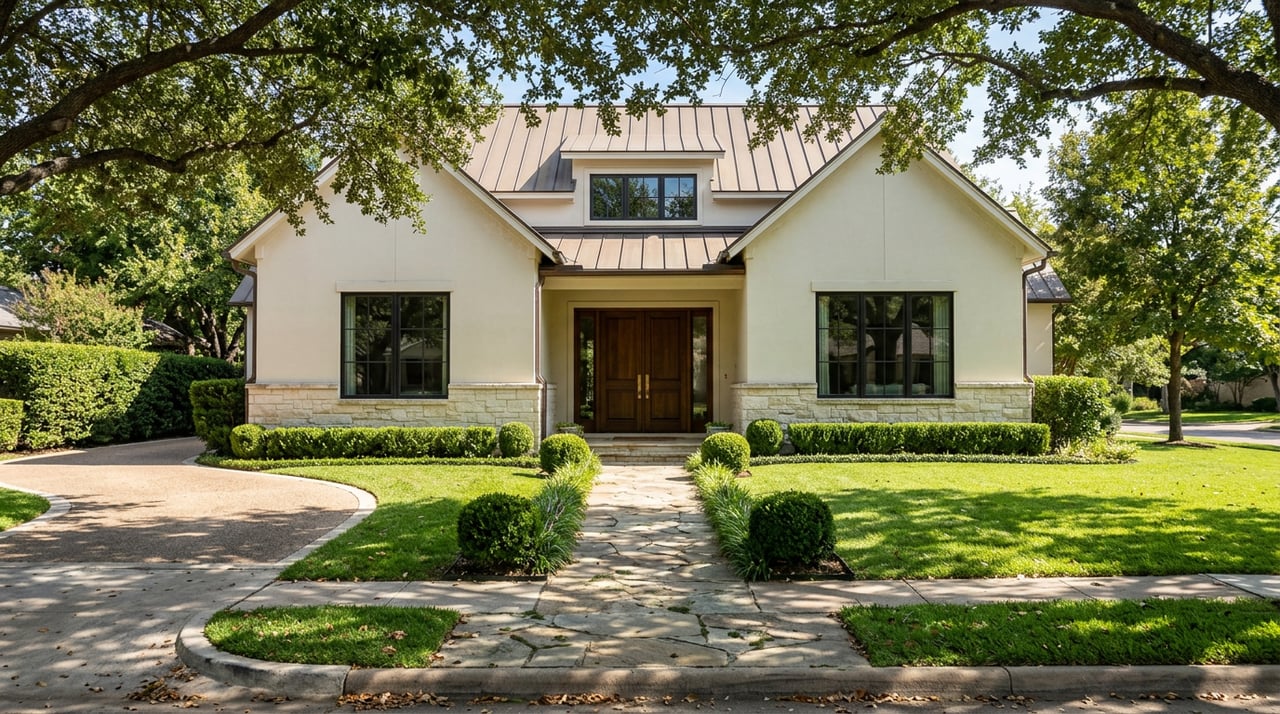
Walk a teardown-candidate lot in North Preston Hollow this month and you will likely stand under a canopy of forty-year-old live oaks and pecans, the kind of mature growth that makes a half-acre feel private even a few hundred feet from Royal Lane. An appraiser will factor that canopy into the lot's appeal. A builder will draw the new floor plan around it. A buyer will fall for it during the first showing.
None of it is protected. Not yet.
Under the City of Dallas's tree preservation rules, known as Article X, a single-family lot under two acres is exempt from tree removal permitting as long as the existing house is still standing and nobody has filed for a demolition permit. That means the owner of a Preston Hollow teardown lot, or anyone acting on the owner's behalf, can remove any tree on that property right now, including species the city would otherwise call protected, without a survey, a mitigation plan, or a dollar owed to the reforestation fund. The moment a demolition permit is filed, that exemption ends. The remaining trees convert to protected status, and the builder inherits a tree survey requirement, a protection plan, and an inch-for-inch replacement obligation that follows the project through to final inspection.
That single line in the ordinance, tied to when a piece of paper gets filed rather than to the tree itself, is the detail most Preston Hollow buyers never think to ask about. It cuts both ways, and it matters most during the option period, before anyone has filed anything.
The Exemption Runs Out the Moment Someone Files
The mechanics are specific. The city's Landscape and Urban Forest Conservation rules define a protected tree as one with a trunk diameter of 8 inches or more, measured 4.5 feet above grade. On a typical residential lot under two acres with a single-family or duplex use still standing, none of that applies. The owner can clear a lot's mature canopy without a permit, a tree survey, or any city review at all.
File for demolition, though, and the lot is treated differently. A tree removal application, a tree survey identifying species and caliper, and a mitigation plan are now required before work begins. Protected trees that come down get replaced on an inch-for-inch basis, meaning a removed 24-inch oak has to be replaced with trees totaling 24 inches of caliper somewhere on the same lot. The requirement stays in force through construction and only lifts once the builder passes final inspection and the property reverts to standard single-family use.
That gap between "house still standing" and "demolition permit filed" is where the ordinance leaves the most room. A tree service industry writeup on Dallas redevelopment describes builders and developers as generally aware of how to time removal within that window, while acknowledging the practice still creates friction with neighbors watching decades-old trees disappear ahead of any permit posting. One longtime resident of Melshire Estates, a North Dallas neighborhood that has seen its own wave of redevelopment, put the concern plainly: "Trees are what make a home and stability."
For a buyer under option on a Preston Hollow teardown lot, the practical version of that friction is this: the canopy you toured during your first showing is not guaranteed to still be standing at closing, and there is no ordinance-based paper trail that would stop a seller from clearing it in the meantime. Nothing about Article X requires notice, survey, or replacement as long as the house is up and no permit has been filed.
Why North Preston Hollow Is Where This Plays Out Right Now
This matters more in Preston Hollow than in most Dallas neighborhoods because of how active its teardown segment already is. Builders and buyers are increasingly moving north of Royal Lane, where an older ranch home on a generous lot can still be acquired largely for land value, in the roughly $800,000 to $2 million range, before a custom home in the 5,000 to 8,000-plus square foot range replaces it. New construction typically runs $300 to $600 or more per square foot before land costs, which puts a finished North Preston Hollow project in the $2.5 million range and up, while comparable projects closer to Old Preston Hollow, where land itself has pushed past $3 million on some streets, run considerably higher.
Preston Hollow also has no architectural review board, unlike Highland Park just to the south. That absence gives builders and homeowners real design freedom on the house itself. It also means the tree canopy, not a design committee, ends up functioning as the practical constraint on where a new footprint can sit on a lot. A builder without an ARB to answer to still has to answer to whatever protected trees remain on-site once a demolition permit is filed, because those obligations are enforced by the city's building official, not by a neighborhood committee.
The Dallas Builders Association's own description of the neighborhood calls Preston Hollow one of the most active redevelopment areas in the city. Put the land economics, the design freedom, and the ordinance timing together, and the tree question stops being a landscaping detail and becomes a real cost and design variable in the deal.
What to Verify Before You Waive the Option Period
If you are under contract on a Preston Hollow lot with a build or teardown in mind, a few specific steps during the option period do more to protect your position than a general home inspection ever will.
- Get an independent tree survey done before you waive option, not after. Identify every tree over 8 inches in diameter, its species, and its location relative to where the new footprint is likely to sit.
- Ask directly whether the seller intends to remove any trees before closing. Nothing in the ordinance requires them to tell you, so the only way to know is to ask and put the answer in writing.
- Confirm with your builder, before you close, which trees they expect to retain versus remove once they file for demolition. Retained trees affect where a foundation, garage, or pool can go under the setback and lot coverage rules that already apply in Preston Hollow's R-1ac and R-1/2ac districts.
- Budget for the inch-for-inch replacement requirement if the build plan keeps any protected trees on-site through construction. That cost and the tree protection fencing it requires around the drip line are real line items, not afterthoughts.
- If the lot backs up to a neighbor's mature trees, understand that boundary or shared trees generally require agreement from both property owners before removal, separate from the demolition-permit timing question entirely.
None of this changes what the lot is worth. It changes whether you know what you are actually buying before your option money is gone.
For Sellers, the Same Timing Cuts the Other Way
If you own a Preston Hollow property that is likely to sell as a teardown candidate, the canopy on your lot is a marketing asset right up until the day a demolition permit gets filed, at which point it becomes the buyer's regulatory obligation to manage. Getting your own tree survey done ahead of listing, and being ready to answer a buyer's questions about it directly, does more for a smooth close than most staging decisions will. Buyers in this segment are sophisticated. They are pricing land, lot fit, and canopy together, and a seller who can speak to all three plainly tends to close faster and with fewer surprises in option.
Preston Hollow's teardown market rewards buyers and sellers who understand the site, not just the house. The ordinance timing around tree protection is a small detail with real consequences for your budget, your build plan, and your closing timeline. If you are evaluating a lot in North Preston Hollow, Old Preston Hollow, or anywhere in between and want a construction-informed read on what a specific property can actually support, Donna Hartley offers a free consultation to walk through the lot, the build economics, and the questions worth asking before you waive your option period.
