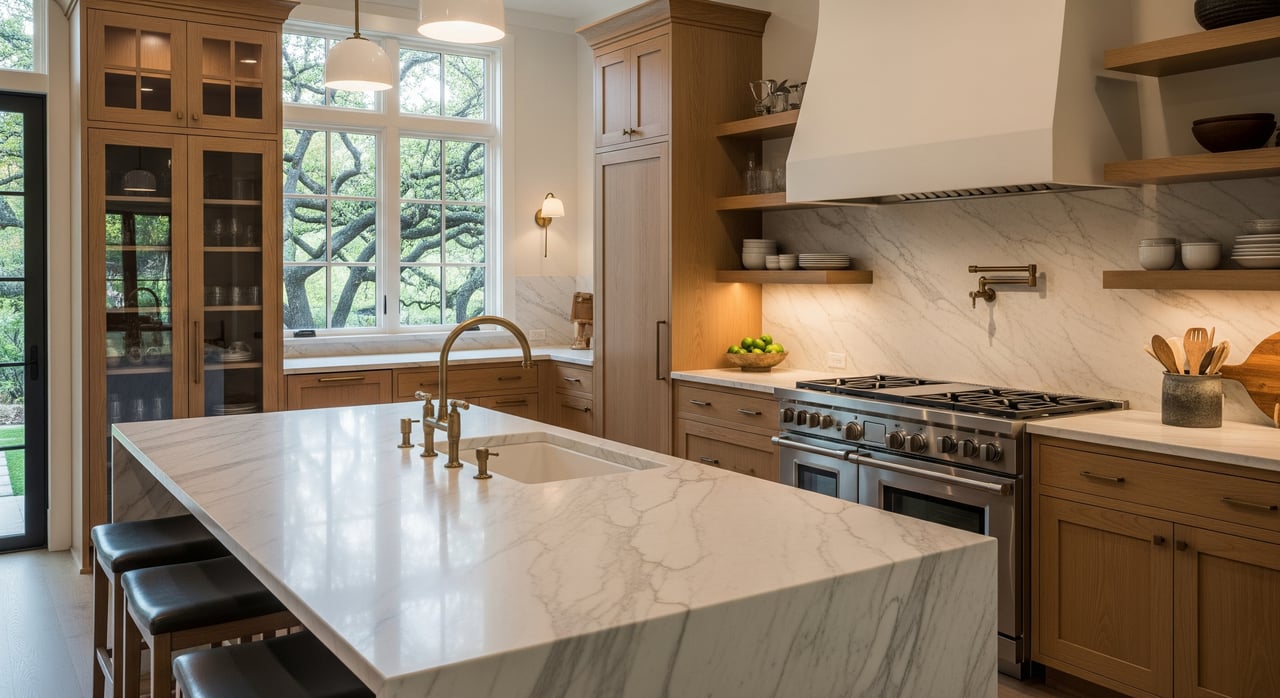
Thinking about taking your Lakewood kitchen from dated to showpiece? You are not alone. Local buyers in east Dallas expect high-end performance, beautiful materials, and layouts that fit daily life. In this guide, you will see realistic costs, what drives the budget, timelines, permit notes in Dallas, and how to align your choices with Lakewood buyer preferences for better resale. Let’s dive in.
What Lakewood buyers want
Lakewood luxury buyers favor premium, low‑maintenance finishes that still feel authentic to the neighborhood. They look for professional-grade, energy‑efficient appliances and custom cabinetry that suits historic Tudors or modern builds. Open sightlines and smart lighting are common asks, along with pantry space, beverage centers, and thoughtful storage. Keep the character, add modern function, and you will hit the mark.
Luxury kitchen cost ranges
Costs vary by scope, size, and structural changes. In Lakewood’s luxury segment, expect the following:
- Cost per square foot: about $300 to $700+ depending on custom work and structure.
- High-end cosmetic refresh: $50,000 to $120,000. Keep the layout, replace doors or cabinets, counters, backsplash, lighting, and appliances.
- Full luxury remodel: $150,000 to $350,000. Reconfigure or go open plan, add custom cabinets, premium stone, professional appliances, new floors, and high-end finishes.
- Ultra-luxury/transformative: $350,000 to $600,000+. Major structural changes, additions, bespoke millwork, multiple built-ins.
- Appliance packages: professional ranges and built-in refrigeration can add $15,000 to $60,000.
- Design and GC fees: design services often run a few thousand dollars to 10% to 15% of project cost on higher-end jobs; general contractor markup commonly 10% to 25% over direct trade costs.
Set scope first. Appliances, custom millwork, and structure are the biggest budget movers.
What drives your budget
Here is where premium kitchen budgets usually go in Lakewood:
- Custom cabinetry and millwork (25% to 35%)
- Inset or period‑correct profiles for Tudors cost more than stock. Specialty finishes and panel-ready designs add labor.
- Countertops and backsplash (5% to 15%)
- Natural stone like marble or quartzite and large slabs raise cost. Full-height backsplash or bookmatched stone reads luxury and prices accordingly.
- Appliances (10% to 20%)
- Professional ranges, built-in refrigeration, dual ovens, and custom hoods add up fast.
- Structural and layout shifts (10% to 30% additional, variable)
- Removing load-bearing walls or expanding the footprint requires engineering and sometimes foundation work. Moving gas, water, or major electrical is a cost driver.
- Mechanical, electrical, plumbing (5% to 15%)
- Panel upgrades, HVAC adjustments for open plans, and premium fixtures are common.
- Flooring and finishes (5% to 15%)
- Historic hardwood repair and patterned tile work can increase labor.
- Design, engineering, permitting (2% to 8%)
- Architects or kitchen designers for complex layouts and historic-sensitive work, plus permits and inspections.
- Specialty items
- Wine storage, butler’s pantry systems, custom lighting, integrated AV, and smart-home features add incremental cost.
Scope and timeline
Lead times on custom materials shape the schedule. Plan your project around decisions made early and ordered on time.
- Minor refresh, no layout change: about 4 to 8 weeks from demo to completion. Allow extra for custom doors and appliances.
- Mid-range remodel, partial reconfiguration: about 8 to 14 weeks. New cabinetry, some floor and lighting work, and limited plumbing or electrical moves.
- Full gut, layout change or structural work: about 12 to 24+ weeks. Full demo, framing, new MEP systems, custom millwork, and finish carpentry.
Important timing notes: custom cabinetry can take 6 to 12+ weeks and certain appliances 8 to 14 weeks. Historic homes may uncover hidden wiring or plumbing issues, which can add time.
Permits and historic fit in Dallas
In Dallas, structural changes and new electrical, gas, or plumbing usually require permits and inspections. If your property sits in a historic overlay or is landmarked, you may need review for exterior and sometimes interior work. Plan for permit review windows of about 2 to 6 weeks, longer if corrections are needed. Before altering defining historic elements, confirm requirements with the City and your neighborhood association.
Get better quotes with a clear plan
- Define must‑haves vs nice‑to‑haves before bidding. Prioritize layout, appliance performance, and storage first.
- Request line‑item bids that list cabinet type, appliance models, stone choice, lighting plan, and allowances. This lets you compare apples to apples.
- Ask about lead times for custom cabinets, stone slabs, and pro appliances. Order early to protect your schedule.
- Verify licensing for trades where required and check references for similar luxury projects in historic and modern homes.
- Expect scheduling premiums for top local trades. Secure your team early, especially during peak seasons.
Resale and ROI in Lakewood
Kitchens drive buyer interest in Lakewood. While very high-cost remodels may not recoup 100 percent of spend, they can improve market time, showing activity, and final price in strong luxury submarkets. For resale, focus on layout and function, high-quality appliances, durable and beautiful cabinets and counters, and lighting and flow. Once those are set, layer in specialty finishes that fit your home’s style.
Tudor charm vs modern openness
For historic Tudors, keep period-appropriate cabinetry profiles, millwork, and proportions. You can still add performance with integrated refrigeration, panel-ready dishwashers, and a butler’s pantry or beverage center. For modern homes, open sightlines, large islands, and smart lighting are attractive, as long as you maintain comfortable zones for cooking, dining, and gathering. In both cases, quality materials and precise installation make the difference.
Quick budget examples
- You want a fresh look without moving walls: refaced or new cabinet doors, quartz or quartzite counters, upgraded range and fridge, new lighting. Budget roughly $50,000 to $120,000.
- You want a custom, reconfigured space with a larger island and built-in refrigeration: custom cabinets, premium stone, pro range, flooring, and lighting. Budget roughly $150,000 to $350,000.
- You want to expand and transform the footprint with bespoke millwork and multiple built-ins: expect $350,000 to $600,000+ depending on structure and finishes.
Ready to align your remodel with Lakewood buyer expectations or prep for a strategic sale? Work with a construction‑savvy advisor who knows how local buyers read materials, layouts, and craftsmanship. Connect with Donna Hartley to review your scope, pricing, and timing, and to plan next steps. Schedule a Free Consultation.
FAQs
How much does a Lakewood luxury kitchen remodel cost in 2025?
- Most luxury projects land between about $150,000 and $350,000, with refreshes from $50,000 to $120,000 and transformative builds at $350,000 to $600,000+, depending on scope and structure.
What timeline should I expect for a full gut remodel in Lakewood?
- Plan for about 12 to 24+ weeks after design and permitting, with longer timelines if structural changes or long-lead materials are involved.
Do I need a permit for a Dallas kitchen remodel with layout changes?
- Yes if you move or add structural elements, electrical, gas, or plumbing; Dallas typically requires permits and inspections for that level of work.
How do historic Lakewood Tudors affect kitchen plans?
- You may need review if the property has a historic overlay, and it is wise to preserve defining interior elements while upgrading function and performance.
What appliances do luxury buyers in Lakewood expect?
- Professional-grade ranges, built-in or integrated refrigeration, and well-planned ventilation are common, often paired with smart lighting and storage.
Where does most of the kitchen budget go in high-end projects?
- Custom cabinetry and millwork often take 25% to 35%, with appliances, stone, and structural work making up much of the rest.
