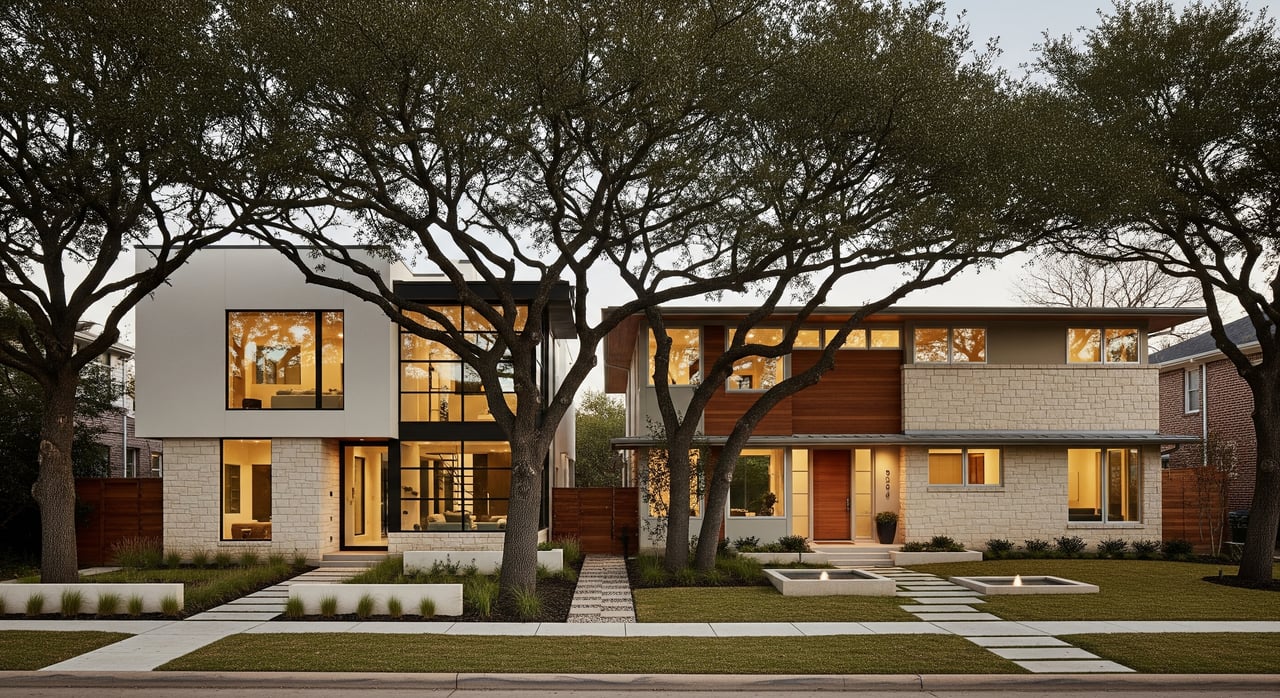
Torn between a sleek new build and a soulful mid-century in Midway Hollow? You are not alone. In this established Dallas neighborhood, you will often choose between a renovated classic on a mature lot and a new construction home built on an infill site. This guide shows you how to compare both options across lots, layouts, energy use, and long-term costs so you can buy with confidence. Let’s dive in.
Midway Hollow market reality
Midway Hollow blends original mid-century homes with ongoing infill construction. Many buyers value lot quality and mature trees, while others prioritize modern systems and open layouts. New builds often command a higher price per square foot, while well-renovated mid-century homes compete on character and thoughtful upgrades. Your choice often comes down to lifestyle fit and how much maintenance you want in the first 5 to 10 years.
Lot and site factors
Orientation, trees, drainage
- Confirm lot orientation for natural light and solar exposure.
- Mature trees can enhance shade and privacy, but roots and drainage patterns matter for foundations.
- Ask about engineered drainage or grading. In heavy rains, proper water management is critical in the Dallas area.
Size and build envelope
- Lot size shapes what you can do: yard depth, pool potential, and room for an ADU or addition.
- New builds on infill lots may maximize footprint with tighter side yards and more vertical living.
- Always verify zoning, lot coverage, height limits, setbacks, and easements before planning changes.
Outdoor amenities and landscaping
- Renovated mid-century homes may come with established trees, patios, or older pools. Upfront cost is lower, but maintenance can be higher.
- New builds often include modern hardscaping, new plantings, and engineered drainage. Early maintenance is lighter as the landscape matures.
Floor plans and livability
Layouts and ceiling height
- Mid-century originals are often single story with distinct living and dining rooms and lower ceilings. Renovations can open key areas but may be limited by load-bearing walls.
- New builds typically offer open kitchen-living spaces, higher ceilings, larger suites, and generous storage.
- Daylighting tends to be stronger in new builds due to larger glazing and taller volumes.
Flex rooms and future needs
- New construction usually plans for home offices, media rooms, mudrooms, and EV-ready garages.
- Accessibility features are easier to integrate in new builds, such as wider doors and zero-step entries.
- Renovated homes can add smart wiring and accessibility, but retrofits can be more complex and costly.
Character vs. modern finishes
- Renovated mid-century homes can preserve architectural details like clerestory windows or exposed beams, which many buyers value.
- New builds trade historic character for contemporary finishes, space planning, and efficiency.
Energy and utilities
New build advantages
- New construction is designed to current codes with higher insulation, tighter envelopes, and efficient windows and doors.
- You will often see zoned, high-efficiency HVAC with sealed ductwork and right-sized equipment.
- Builders can pre-wire for EV chargers and plan for future photovoltaics.
Retrofit pathways
- A thoughtful retrofit can narrow the gap for a mid-century home. Focus on attic insulation, air sealing, duct sealing, and high-efficiency HVAC for the best return.
- Replace windows selectively based on condition and orientation to manage cost.
- Ask for utility histories on renovated homes and for equipment specifications or modeled performance on new builds.
Solar readiness and EV
- Dallas has a strong solar resource. New builds can optimize roof pitch and wiring for PV.
- For mid-century homes, verify roof age, shading from mature trees, and structural capacity before planning solar.
- Utility policies and incentives vary by provider, so confirm details before you invest.
Maintenance and total costs
Lifespan basics
- Roofs typically last 20 to 30 years depending on material. HVAC often runs 10 to 20 years with proper care.
- Water heaters average 10 to 15 years. Windows and doors can last 20 to 30 years but may need service sooner.
- Older plumbing or electrical systems can require upgrades. Foundation and drainage maintenance is ongoing in tree-heavy lots.
Warranties and risk
- New builds usually include builder warranties. Many offer one year for workmanship and longer structural coverage, often up to 10 years. Get terms in writing.
- Renovated homes may come with trade warranties. Some buyers add private home warranties, but coverage can be limited.
Insurance and taxes
- New builds and significant renovations can increase assessed value and property taxes.
- Insurance premiums reflect age and condition. Newer systems and roofs often improve underwriting compared with older, deferred items.
Unexpected renovation costs
- Hidden structural issues, termite damage, or foundation movement can appear once walls open.
- Hazardous materials like asbestos or lead paint may require abatement.
- Electrical service upgrades are common for modern loads such as EV charging and high-performance HVAC.
Financing and timelines
How purchases differ
- New builds may involve a construction-to-permanent loan or a builder package. Expect a longer timeline with possible permit or inspection delays.
- Renovated homes typically qualify for standard financing. If you plan further work, renovation loans can help but add process steps.
- Appraisals will consider comparables, scope of renovation, or new construction value.
Inspections and due diligence
- For renovated mid-century homes, order a thorough inspection covering roof, attic, foundation, electrical capacity, plumbing materials, HVAC, and pest. Add testing for asbestos or lead if relevant to age and scope.
- For new builds, confirm milestone inspections at framing, mechanical rough-in, and final. Verify third-party testing and code compliance.
Buyer checklist for Midway Hollow
- Define priorities: character vs. turnkey modern, single story vs. multi-level, yard size, energy performance, commute, and school proximity.
- Set a maintenance reserve: plan higher near-term reserves for older homes; expect lower immediate costs for new builds.
- Confirm jurisdiction, zoning, deed restrictions, and any overlay rules before major changes.
- Verify upgrades and permits on renovated homes and request warranty transfers where available.
- Review roof age, HVAC and water heater age, electrical service capacity, and drainage.
- Compare total cost of ownership: near-term capital needs, expected utilities, insurance, and potential tax changes.
- Consider resale: in established neighborhoods, lot quality and orientation often drive long-term value.
The bottom line
If you value mature trees, a wider lot, and authentic details, a well-renovated mid-century may be the right fit. If you want modern layouts, higher energy performance, and fewer near-term surprises, a new build may suit your lifestyle. With a clear view of lot quality, systems, and long-term costs, you can move forward with certainty.
Ready to weigh specific homes in Midway Hollow and compare total cost of ownership side by side? Reach out to Donna Hartley for construction-savvy guidance and a private tour plan. Schedule a Free Consultation.
FAQs
Energy efficiency in Midway Hollow: can a renovated mid-century match a new build?
- Yes, if the renovation includes comprehensive air sealing, insulation, duct sealing, and high-efficiency HVAC; piecemeal upgrades deliver smaller gains.
Maintenance costs: are new builds cheaper over time?
- New builds usually have lower maintenance in the first 5 to 10 years; long-term costs depend on build quality, materials, and regular upkeep.
Property taxes: will a new build increase my bill?
- Possibly, since assessed value often rises with new construction or major renovations; timing and local appraisal rules affect the impact.
Lot vs. house: which matters more for resale?
- In established neighborhoods, lot quality, size, orientation, and privacy often drive long-term value more than interior features.
Inspections for mid-century homes in Dallas: what is essential?
- Order structural and foundation reviews, full electrical and plumbing checks, HVAC evaluation, roof and attic inspections, pest review, and hazardous material testing if relevant.
