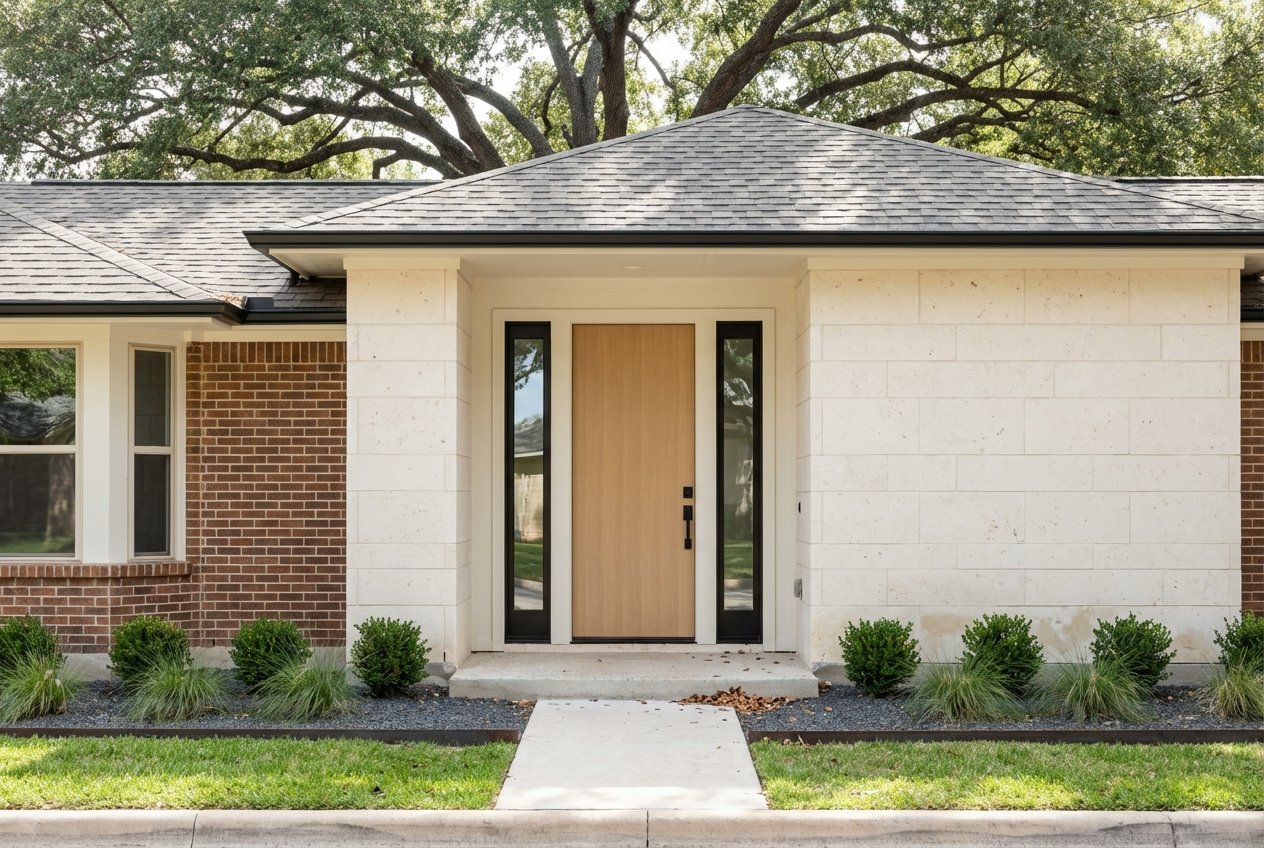
Is your Bluffview at Camino Real home almost right, but not quite? Maybe you crave an open kitchen, a larger primary suite, or modern systems. You might be weighing a full remodel against tearing down and starting fresh. This guide walks you through local rules, site realities, costs, timelines, financing, and resale fit so you can choose with confidence. Let’s dive in.
Bluffview at a glance
Bluffview at Camino Real sits within San Antonio and includes many single-family homes from the 1970s through the 1990s on lots around 0.25 to 0.4 acre. Mature trees and established yards are common. A recent neighborhood median sale price near $625,000 helps set expectations for resale targets and scope. Some parcels fall under subdivision covenants or an HOA, which can require architectural review for visible exterior changes.
What this means for your decision: trees, setbacks, and any HOA approvals can shape what is practical to remodel and what is feasible to rebuild. Verify parcel-specific constraints before you commit to a plan.
What San Antonio requires
Permits and plan review
Most Bluffview addresses are inside San Antonio city limits, so your project will route through Development Services. The City requires building permits for new homes, additions, and many remodels, and larger projects typically undergo plan review. Additions over 1,000 square feet or a second story usually need formal plan review with permit drawings and a defined timeline. Review the City’s process on the Residential Permits page to budget time and fees appropriately. You can also track applications and reviews in BuildSA.
- Explore the Residential Permits process: City of San Antonio Development Services
- Access the BuildSA portal and resources: BuildSA
Demolition and deconstruction
If you consider a teardown, you will need a demolition permit. The City’s deconstruction ordinance can apply to older homes and may require certified deconstruction contractors, reporting, and a review hold by the Office of Historic Preservation. Demolition contractors must be registered and bonded. Expect these steps to add time and cost to a rebuild path.
- Learn demolition requirements: Demolition and Deconstruction
Tree preservation rules
San Antonio’s Unified Development Code defines significant and heritage trees, sets retention and mitigation rules, and often requires a tree survey or affidavit. Protected trees can affect where you place a new structure, driveway, or pool. If you plan a rebuild or large addition, get a tree inventory early and factor mitigation into your budget.
- Review tree standards and mitigation: UDC Tree Preservation
Zoning, setbacks, and coverage
Zoning controls setbacks, massing, lot coverage, and other siting rules that define your buildable area. Confirm the parcel’s zoning and any overlays before you design. If your desired footprint exceeds setbacks or coverage, a remodel or targeted addition might be a better fit than a full replacement.
- Check development standards: UDC Zoning and Form Standards
Floodplain and drainage
If your lot touches a regulated flood zone, you may need a Floodplain Development Permit, elevation certificates, or drainage modeling. These requirements can add cost and influence foundation type and finished-floor elevation. Always check FEMA and City flood maps at the outset.
- Start with City flood guidance: Drainage and Flood Information
Early site checks that save time
Before you choose remodel or rebuild, verify the basics:
- Confirm jurisdiction and zoning. Use the City’s BuildSA resources to verify your parcel and request a zoning check.
- Pull your recorded documents. Search the Bexar Appraisal District for your legal description, recorded plat, and any deed-restricted covenants that may affect design or demolition.
- Start your parcel review at BCAD.
- Order a topographic boundary survey and a tree survey. Mature or heritage trees often drive siting and access.
- Check floodplain status using FEMA and City maps. If needed, get a quote for an elevation certificate.
- Verify utilities. Confirm water, sewer, electric, and gas service sizes and locations; moving or upsizing service can impact your budget.
- Ask the HOA or architectural review board about approval steps and timelines if covenants apply.
Costs, ROI, and timing
Every site and scope is unique, but local benchmarks help you budget:
- New construction costs. Regional estimates suggest typical new-home costs around the low-to-mid hundreds per square foot, with many San Antonio builds ranging roughly 110 to 200 dollars per square foot depending on sitework and finish level. See a localized range in these San Antonio build cost estimates.
- Remodel ROI. Regional Cost vs. Value data shows exterior upgrades often recoup a higher share at resale than large interior overhauls, while full kitchen remodels and big additions tend to recoup a partial share. Use the West South Central Cost vs. Value report to prioritize projects that align with your goals.
- Timelines. A major remodel that includes design, permits, and construction typically takes about 3 to 9 months. A teardown and custom new build often runs 6 to 14 months after permits, with plan review, demolition requirements, sitework, and inspections adding to the schedule.
Practical tip: Compare all-in costs, not just base construction. Include demolition or deconstruction steps, tree mitigation, utility upgrades, grading and drainage, driveway changes, and permit fees in both scenarios.
Financing and tax impacts
- Financing options. You can fund a remodel with cash, a HELOC, a second mortgage, or a renovation mortgage that bundles the work into one loan. FHA 203(k) and conventional renovation products like HomeStyle can finance purchase-plus-renovation or refinance-plus-renovation. Lenders typically require contractor bids, a detailed scope, and draw inspections. To find experienced consultants, use HUD’s 203(k) consultant search.
- Property taxes. Substantial improvements often increase your appraised value with the Bexar Appraisal District, which can raise annual taxes. Review your property record and plan for appraisal changes.
- Look up your parcel at BCAD.
Resale and design fit in Bluffview
Buyers in established neighborhoods like Bluffview often value mature trees, privacy, and homes that fit the local scale. A replacement home that is out of character for the lot may not command a proportionate premium. On the other hand, a new build can deliver an optimal layout, energy-code compliance, and lower long-term maintenance. If there is community or preservation interest, remember that demolition reviews can draw extra scrutiny. Balance your personal goals with expected buyer preferences and the surrounding streetscape.
Remodel vs. rebuild: quick framework
Consider a major remodel if:
- The structure, foundation, and roof framing are sound and your target square footage fits within setbacks and the existing footprint.
- Protected trees or site constraints make a new footprint difficult but allow a thoughtful addition.
- You want to preserve mature landscaping and minimize site disruption.
- You prefer a shorter, potentially less complex path with fewer discretionary reviews.
Consider a teardown and rebuild if:
- The home needs extensive structural, foundation, or systems work that rivals new-build cost.
- You want a fundamentally new layout, higher ceilings, or performance upgrades that are costly to retrofit.
- Floodplain, elevation, or drainage requirements make lifting or retrofitting the existing home inefficient.
- Your lot size and setbacks allow a better siting solution that meaningfully improves function and value.
Your step-by-step next moves
Confirm zoning and jurisdiction in the City’s system and request a zoning verification if needed. Use BuildSA as your hub.
Pull recorded documents and your plat from BCAD. Note any covenants and easements that affect design or demolition.
Order a boundary/topographic survey and a tree survey. These documents will guide siting, driveway options, and mitigation planning.
Run a floodplain check and, if applicable, get an elevation certificate quote. Start with the City’s Drainage and Flood Information.
Ask an architect or design-build contractor for two quick feasibility sketches: one that retains and expands, and one that rebuilds within setbacks and tree constraints. Use the UDC’s standards to understand setbacks and coverage.
Request 2–3 written estimates for each path. Require line items for demolition or deconstruction, tree mitigation, utilities, grading, driveway changes, and permit fees. Include a contingency of 10 to 20 percent for unknowns.
Talk with a lender about your financing route early, including renovation mortgages like FHA 203(k). Expect to provide plans, contractor agreements, and a construction budget.
If demolition is on the table, review City Demolition and Deconstruction requirements and ask if any Office of Historic Preservation review applies.
Ready to pressure-test your plan against resale targets and neighborhood fit? If you want a construction-informed perspective on scope, budget, and timing, reach out to Donna Hartley for a clear strategy.
FAQs
What permits do you need to demolish a house in San Antonio?
- You need a demolition permit, and many older homes must follow deconstruction rules that can include OHP review, certified contractors, and bonding. Review City requirements before you bid the work.
How do tree rules affect building in Bluffview at Camino Real?
- Significant and heritage trees can restrict where you place a new footprint, driveway, or pool, and may require mitigation. A tree survey early in design helps you avoid delays and redesign.
How long does a whole-home remodel typically take in North San Antonio?
- Many major remodels take about 3 to 9 months from design through construction, depending on scope, permitting, lead times, and inspections. Whole-house projects trend toward the longer side.
What financing options can help fund a large remodel?
- Common options include cash, a HELOC, a second mortgage, or a renovation loan like FHA 203(k) or HomeStyle. Lenders usually require a contractor, a written scope, and draw inspections.
Will a rebuild raise my Bexar County property taxes?
- Substantial improvements often increase your appraised value, which can raise annual property taxes. Review your current record and budget for potential changes.
Do I need HOA approval in Bluffview of Camino for exterior changes?
- If your lot is subject to covenants, visible exterior work or demolition may require architectural review in addition to City permits. Ask the HOA for timelines, fees, and submission requirements.
